
One of the things I’ve noticed since moving into the quantum computing space is how much of the conversation is still framed around the potential of what quantum will do someday, for someone, under the right conditions. That framing isn’t wrong exactly, but it tends to obscure the more immediate question: what does the path from here to there actually look like, and who is doing the infrastructure work to build it?
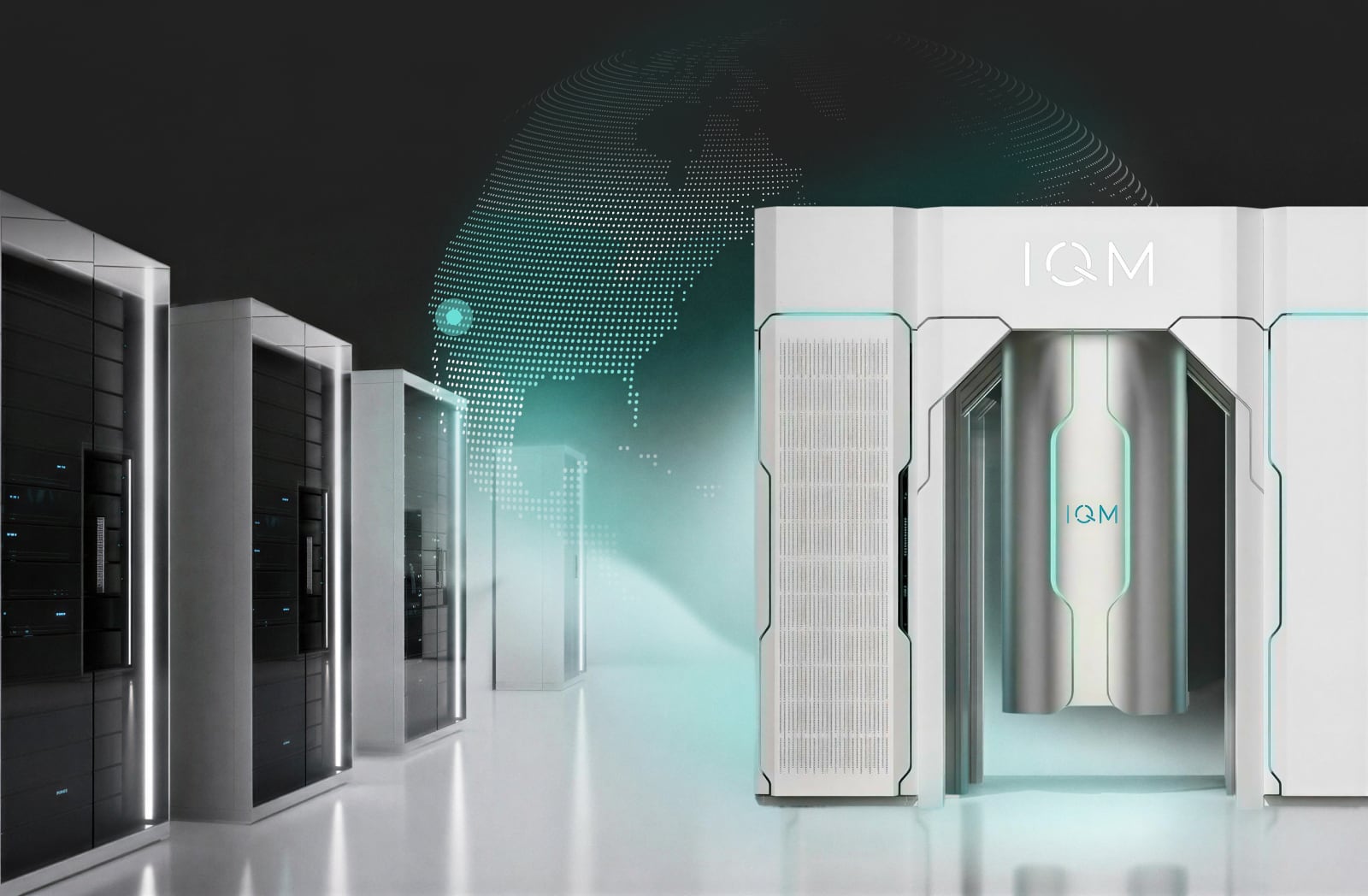
Today at HPE Discover Las Vegas, HPE announced IQM as one of its named quantum collaborators in their hybrid classical-quantum computing platform. I want to explain why I think that’s significant, and be honest about what it is and isn’t.
HPE is building out a hybrid quantum-HPC platform that brings together multiple quantum hardware modalities (superconducting, neutral atom, ion trap, silicon spin) alongside their classical Cray supercomputing infrastructure. The goal is to create testbeds for hybrid algorithm co-design, benchmarking of quantum-HPC workflows, and software interoperability across these environments.
IQM is their superconducting quantum partner in that work. We’re collaborating on the integration of IQM’s quantum systems with HPE’s HPC infrastructure, and working together to identify and pursue opportunities where that integrated stack makes sense for customers.
I want to be direct about where we are: this is the beginning of a collaboration, not the end of a process. The engineering challenges are real. Tightly coupling quantum processors to classical supercomputers (managing latency, data movement, error correction, control systems) is genuinely difficult. What we’re doing with HPE is the serious, methodical work of figuring out how to do it right.
There’s been healthy debate about where quantum computing finds its first real foothold in enterprise. Cloud access is one model. Standalone systems are another. My view, shaped by what I’ve seen in the U.S. market, is that the most credible near-term path runs through HPC.
The organizations most likely to find practical value from quantum in the next few years are the ones already running the most demanding classical workloads: national laboratories, research institutions, defense and aerospace organizations, pharmaceutical companies working on molecular simulation. These are HPC customers. They have the technical sophistication to work with quantum systems that are still maturing, the domain knowledge to identify where quantum might offer genuine advantage, and the infrastructure to integrate it properly.
IQM’s deployment model fits that environment well. We build full-stack quantum computers designed for on-premises deployment, integrated directly with existing HPC infrastructure. That means the customer owns the hardware outright, controls the data, and retains the IP generated on the system. There’s no shared cloud environment, no queuing behind other users, no dependency on a vendor’s uptime. The quantum processor runs dedicated, alongside the classical system, as a specialized accelerator for specific problem classes where quantum algorithms offer a meaningful advantage over classical approaches.
This isn’t a research prototype model. IQM has deployed 23 systems globally, more than any other quantum hardware manufacturer, to institutions that run production workloads and need systems that perform reliably. That deployment track record is part of why the integration work with HPE is grounded in operational reality rather than speculation.
That’s also the architecture HPE’s hybrid platform is designed around. It’s why the collaboration makes sense technically, not just commercially.
I’ll be straightforward about our position in the U.S. market: IQM is a strong European company that is working hard to build meaningful presence here. We just installed our first on-premises quantum system in the United States at Oak Ridge National Laboratory, one of the world’s leading HPC facilities. That’s a significant milestone for us. But the U.S. market is competitive, the customers are sophisticated, and credibility here is earned through consistent execution, not press releases.
The HPE collaboration is significant in that context because it connects IQM to the commercial HPC ecosystem in a way that matters to U.S. enterprise and federal customers. HPE has deep relationships across the national lab system, the defense industrial base, and large enterprise: exactly the customer segments where IQM’s deployment model is most relevant.
HPE Discover this week is the starting point for that work in public. We’re at demo booth #629 if you want to see what the integration looks like in practice.
I’m aware that “quantum is finally getting real” has been said more times than anyone would like to count. I don’t want to add to that noise. What I can say is that the infrastructure work (the testbeds, the integrations, the benchmarking, the software toolchains) has to happen before the applications can follow. That work is what this collaboration is about.
The customers who will be first to find practical value from quantum are the ones doing that infrastructure work now. IQM and HPE are trying to be good partners to those customers.

Search faster—hit Enter instead of clicking.
Click to expand