
A year ago, Microsoft Quantum committed to building a quantum research center in Maryland. That center is now open in the University of Maryland’s Discovery District.
We know why they picked it. We picked it too. Our first U.S. Quantum Technology Center is in the same district, just down the road.
We don’t just program quantum computers. We build them. And we’re partnering with Microsoft to teach students, researchers, and career switchers how to build them too.
College Park is an unusual place. NIST, NASA Goddard and the Army Research Laboratory are all close by. So are UMD’s Applied Research Laboratory for Intelligence and Security and the Johns Hopkins Applied Physics Laboratory. Maryland is putting a billion dollars over five years behind its Capital of Quantum initiative, and UMD turns out more quantum PhDs than almost anywhere in the country.
So we’re glad to see Microsoft open their doors, and proud to be partnering with them on what’s inside.
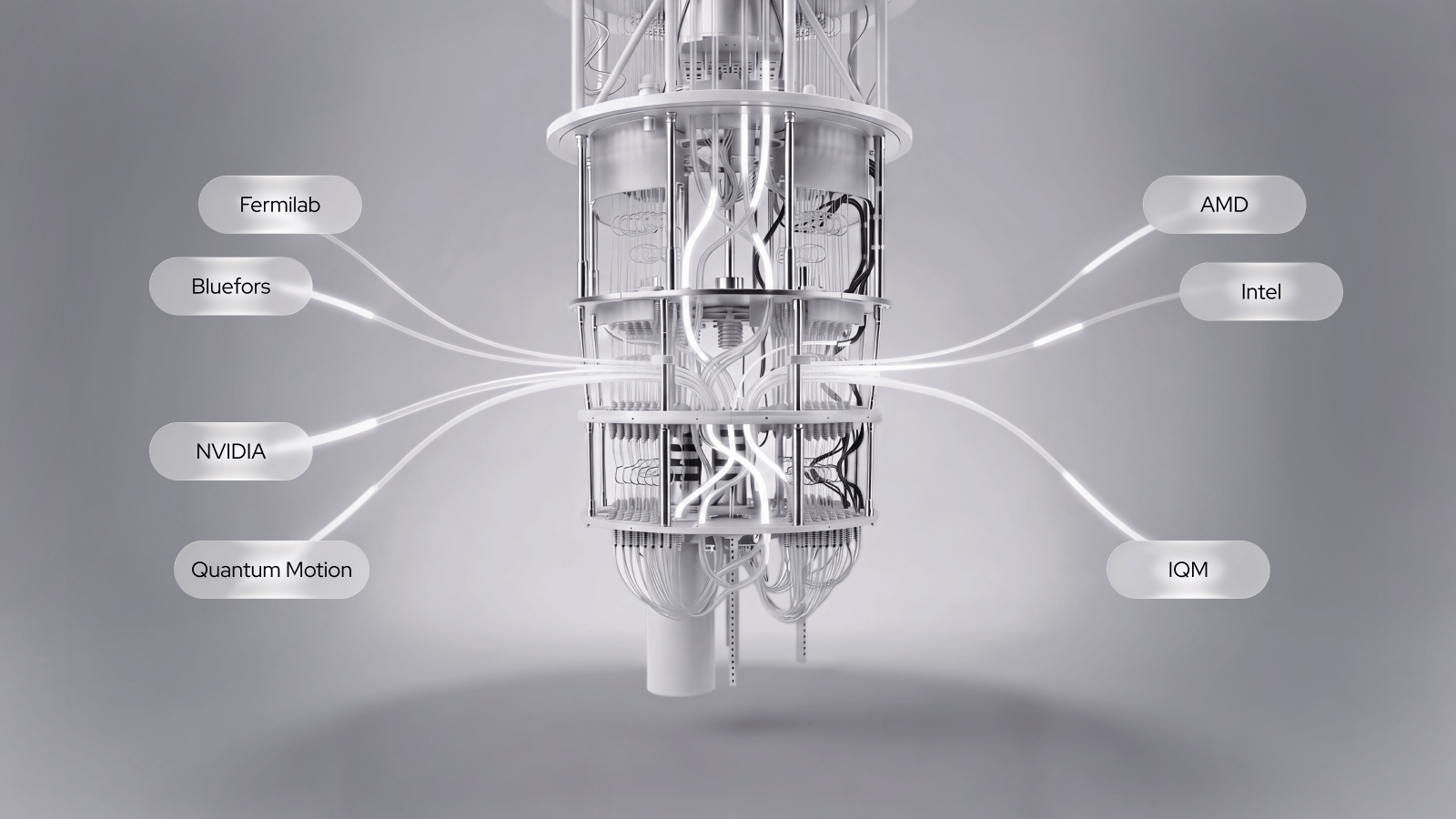
Their new center includes a quantum hardware makerspace, and IQM is one of seven initial partners, along with AMD, Bluefors, Intel, Fermilab, NVIDIA and Quantum Motion.
What we’re bringing is expertise. Our people will work directly with learners on how these machines get built, tuned and kept running.
The idea is that you learn quantum hardware by building quantum hardware. Students, researchers, teachers, people switching careers into quantum. They get their hands on real equipment and access to the people who work with it every day. They figure out which design is worth building, work out what to measure, and learn where to look when a result makes no sense.
Here’s what makes that rare. Almost all quantum education happens at the software level because it’s easy to give everyone access to software. Hardware education requires physical hardware access, and that’s rare. You can learn to write a quantum circuit and never once see the inside of a cryostat. This goes after the missing half.
Because the hard part of quantum isn’t theoretical physics anymore. It’s finding people who know how to design and maintain machines.
Think about how few engineers have actually opened a cryostat. Or tuned a control line. Or spent a morning chasing a calibration that drifted overnight for no obvious reason. Small group. It doesn’t grow by reading about it. It grows when people get near real systems, standing next to the people who run them.
That’s how most of our customers got started, which is why this isn’t a side project for us.
IQM Spark was built for exactly this, a full-stack system designed for universities and research centers rather than national labs. In Japan, TOYO is opening both its systems to universities, research institutes and companies nationwide. In Brazil, Eldorado is doing the same across its network of universities, startups and industry partners around Campinas.
The pattern keeps repeating because it works. Capability shows up where the machines are, and where somebody decides to let other people use them.
Microsoft’s hope is that what gets piloted in Maryland becomes something other places can copy, a real framework for building a quantum workforce.
That’s the right ambition. It’s also why the partner list matters more than any single contribution on it.
Seven companies and a national lab, each bringing something different to the same room.
Nobody teaches this alone.

Search faster—hit Enter instead of clicking.
Click to expand