
In eight days this month, three customers on three continents announced how they are bringing quantum computing in-house. Four countries sharing one system in Finland. A corporation in Japan buying two. A research institute in Brazil buying its first.
The real news is not that they all bought computers. It is that they bought a stack, and each of them in a different way.
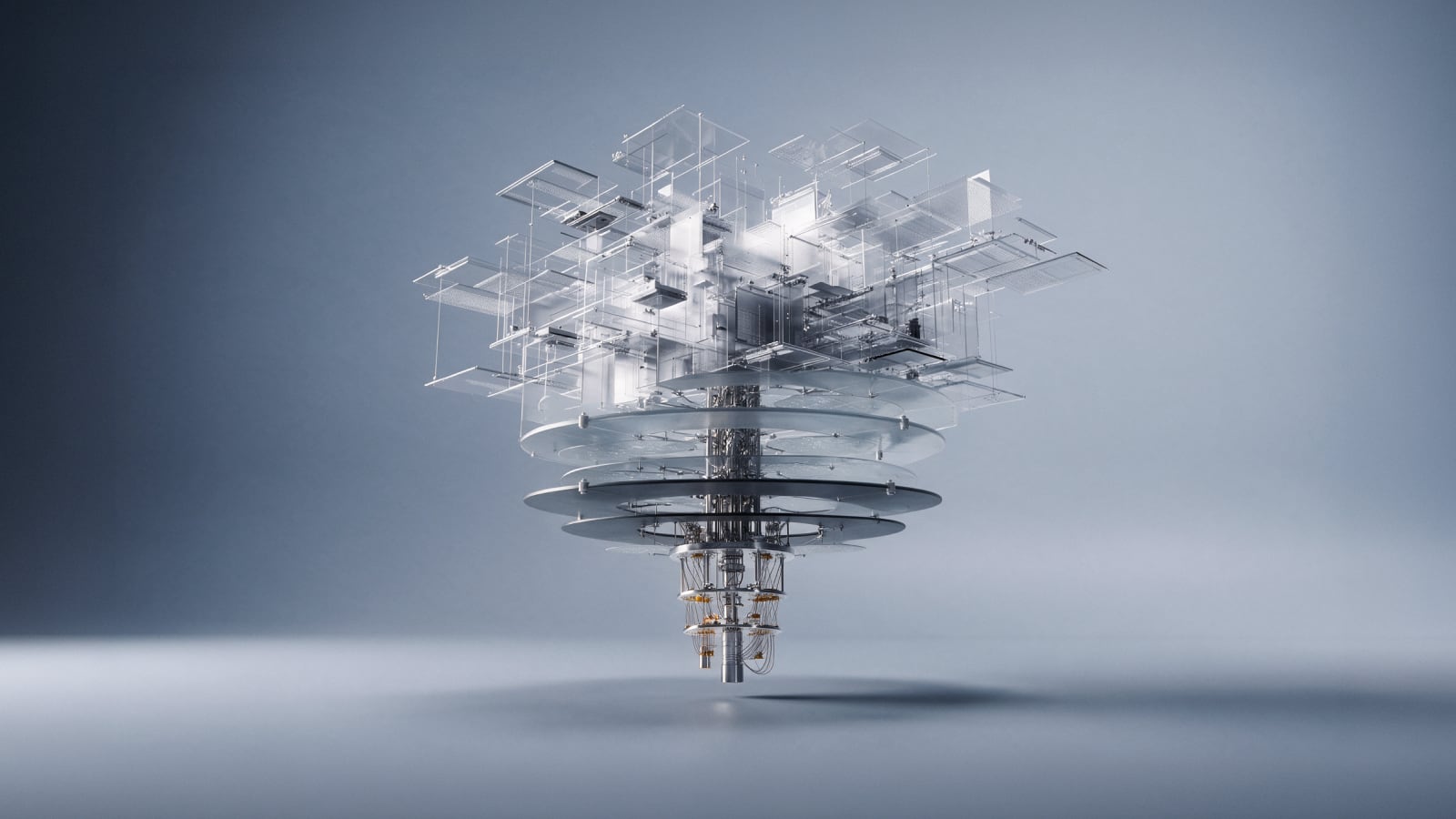
A quantum computer is a product. You can buy one, put it on a floor and switch it on. What decides whether it produces anything is everything around it. The error correction that turns fragile physical qubits into stable logical ones. The software that lets it talk to the systems you already run. The integration into your HPC and AI environment. The algorithms and applications that turn a machine’s work into an answer to a real question.
That is the stack, and the machine is its foundation. Buy the machine on its own and you own the foundation and none of the building.
Most routes into quantum give you one layer and leave the rest to you. Renting time gives you results without building capability. A sealed system gives you a machine you host but cannot change.
Buying into a stack means the whole system is yours. The machine, the software that runs it, the integration into everything around it, and, where the system has one, a contracted path to upgrade it. No layer sits with a third party, so nobody outside the arrangement can change your terms.
Announced on September 17: Eldorado Research Institute is installing an IQM Spark at its headquarters in Campinas, around 100 kilometers northwest of São Paulo, in the first quarter of 2027. It is our first quantum computer in South America, and it is the smallest system in this piece.
The agreement also includes remote access to IQM’s 54-qubit cloud-based system in Europe. A small machine they own, and a larger one they can connect with.
For an institution starting from nothing in hardware terms, that pairing beats saving up for a big machine. Own something you can learn on, build on and train people on, and reach something larger when a problem actually calls for it. The alternative is to wait until the budget stretches to a large system, by which point the people who started small have several years of experience you do not have.
Because the Spark is theirs, what it produces stays with them. The expertise, the trained researchers, the code, the working relationships with industry partners. None of that is on loan.
Eldorado has been doing applied research for more than 27 years, employs more than 1,000 specialists, and works across information and communications technology, automotive, agribusiness, energy, oil and gas, fintech and healthcare. It sits alongside the Unicamp campus in Brazil’s largest technology cluster. So the route out from a single machine into a national ecosystem is already built, which is the part that is hard to buy.
On September 10, CSC and the LUMI AI Factory announced the upgrade path for LUMI-IQ, a system jointly owned by Finland, Czechia, Norway and Poland and co-funded by the EuroHPC Joint Undertaking. It is set to become Europe’s first superconducting quantum computer with logical qubits. It sits at CSC in Kajaani, integrated into the LUMI AI Factory, and it is at the other end of the scale from Campinas.
What those four countries committed to is a sequence. The system arrives in 2027 as an IQM Halocene H4, with 150 physical qubits and early error correction. In 2028 it is upgraded to lower logical error rates and real-time correction. In 2029 it becomes a Halocene H5, running full logical operations on up to nine logical qubits. The hardware changes underneath while the thing they bought, a path toward logical qubits, stays the same.
Because they own it, they can contract for that. A roadmap isn’t something you can rent. And because they own the system rather than just a machine, everything they build around it isn’t lost when they upgrade. The integration with LUMI, the software, the people who learn to run it. That work is the real investment, and none of it gets thrown away when the hardware improves.
On September 15, TOYO Corporation announced its second IQM system. It now owns two: an IQM Spark at its R&D center in Kiba, Tokyo, and an IQM Radiance 20 going into AIST’s G-QuAT facility. Both are delivered at the end of 2026 and operational in early 2027.
TOYO is a Japanese technology group with businesses spanning energy, mobility, defense and security, ocean systems, life science and software quality, and a quantum solutions unit of its own. Its depth in advanced measurement explains what it is doing with the systems, which is a use most owners would not think of. Alongside its own quantum program, they will serve as a testbed for evaluating and verifying components and related technologies used in superconducting quantum computers, under real operating conditions.
Then TOYO did something really interesting. It said it would open up both systems to companies, organizations, research institutes and universities across Japan.
That is a decision only an owner gets to make. You cannot share rented time, because it is not yours to share. An ecosystem is not built with machines nobody outside the building can touch.
The stack ends at the customer’s question. We build up to and including the application layer. The algorithms, the frameworks, the software that makes a quantum computer usable by people who are not quantum physicists. We do not build the use case. The customer does.
That work happens in collaboration and it belongs to the customer. Battery chemistry with Volkswagen, where algorithmic improvements cut the projected classical runtime for a 100-orbital system by a factor of 248, from close to five centuries down to a couple of years. Biomolecular simulation with UCL, TUM, LMU, NVIDIA and the Leibniz Supercomputing Centre, where a 54-qubit system ran inside a GPU-accelerated pipeline on drug-target proteins.
Those are their problems. When the results come, they are the ones who should say so.
Because quantum advantage will not arrive as an event.
There will be no date and no announcement, no morning when quantum computing starts paying. It will come in drips. Problem by problem, one use case at a time. A molecule here, an optimization there.
Which means the work has to be underway before it happens. The integration done. The software running. Researchers who already know what problem to point the system at. None of that can be assembled on short notice, and none of it can be bought in the quarter it becomes urgent.
This is what these three have done. They are not betting on quantum. They are getting ready to use it.

Dr. Jan Goetz is CEO and Co-founder of IQM Quantum Computers, headquartered in Espoo, Finland. IQM has delivered more quantum systems than any other manufacturer globally and is preparing to become the first European quantum company listed on a major U.S. stock exchange.
Search faster—hit Enter instead of clicking.
Click to expand