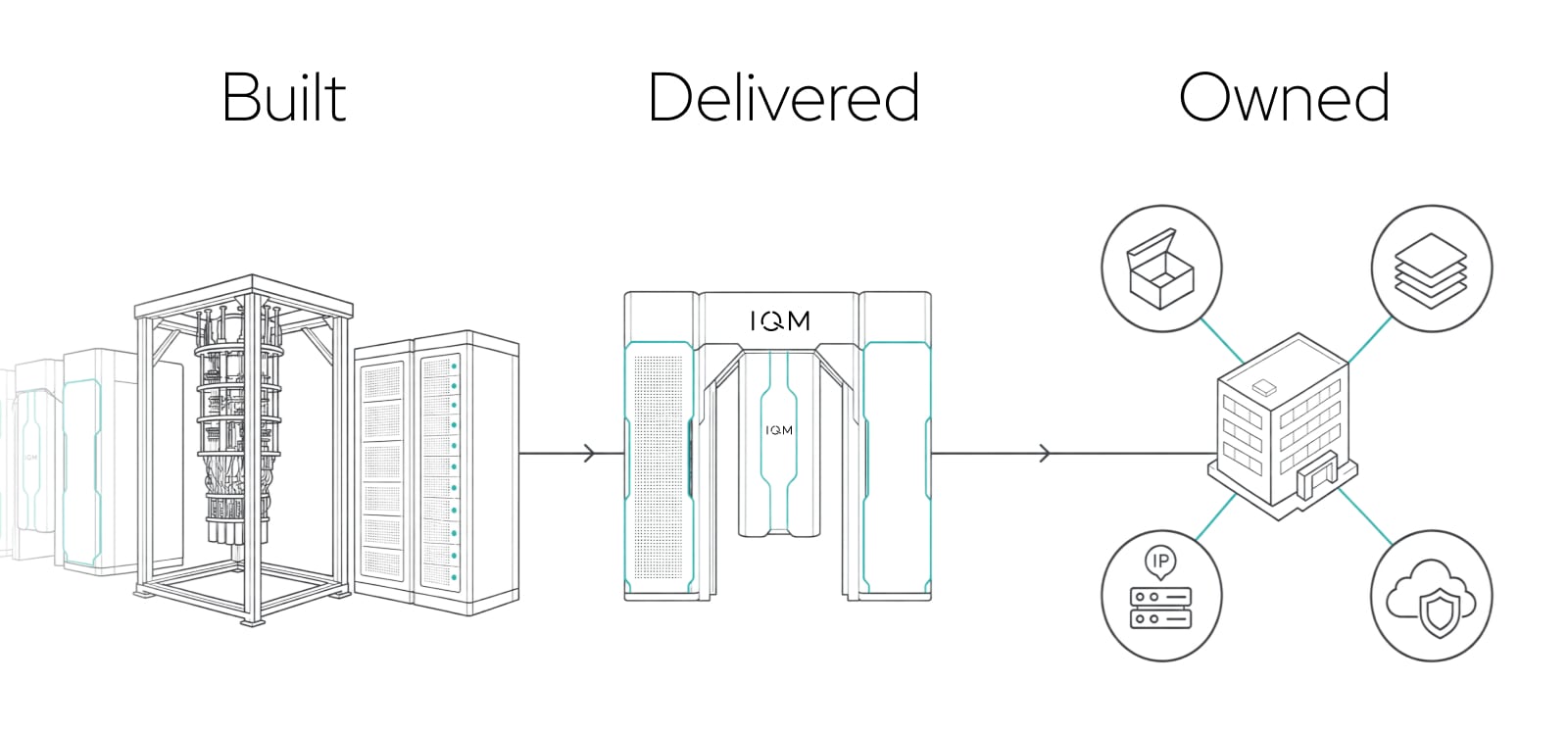
We build quantum computers and we deliver them to customers who own and operate them. We deliver the machine itself, on their floor, integrated with the computers they already run. We also deliver quantum computing through the cloud running in our own sovereign data center. Not as a black box that is fragile and often offline. But as an industry solution running stable with a an open, transparent, and modular software stack.
For a long time the story of quantum has been about waiting. Wait for more qubits. Wait for error correction. Wait until it is ready. But I have come to believe the waiting is the risk, not the safe choice.
Here is what changed my mind. It was not a breakthrough in a lab. It was watching who started buying.
This year a company in Poland called Galaxy became the first private enterprise in the world to buy a quantum computer from us. They did not call it an experiment. They called it technological sovereignty. They wanted the system in their own data center, under their own control, with their own data staying their own. A few weeks later TOYO in Japan did the same thing, the first enterprise in the country to buy one. Their words were about owning the infrastructure, operating it, and growing with it.
I did not put those words in their mouths. They are not our customers repeating our marketing. They are serious companies explaining, in their own language, why they decided to own the machine rather than rent time on someone else’s.
That is the whole idea. We call it Production Quantum. A quantum computer you own, operate, and build on. The reason it matters is not really about quantum at all. It is about control. If the capability lives on your premises, nobody can throttle it, reprice it, or take it away. You keep your data. You keep what you learn. You build the expertise inside your own walls instead of waiting for access to someone else’s.
Auto-calibration has been the quiet bottleneck in running these systems. We could take that off the table, building quantum computers that run around the clock. Meaning that our customers can focus on what they actually bought the machine for. That is the work that matters now. Not promising what quantum will do in ten years. Closing the gap between a quantum computer that works in a lab and one that works in a data centre.
That gap is closing. Our first system in the United States is now installed at Oak Ridge National Laboratory, connected to their supercomputing environment, run by their teams. The same model we deploy everywhere. The customer owns it.
Becoming a public company does not change any of this. It funds more of it. We are not asking anyone to believe in a future we cannot show them. We are pointing at machines that are already installed, already running, already owned by the people using them.
We are still early. But the gap between a quantum computer that works in a lab and one that works in a data center is closing. And the companies that started early are the ones who will know how to use these machines when everyone else is still waiting.
We are excited about the future, because we are building it ourselves. With our own hands, with our own brains. Around the world as a global company. But based on values we care about: collaboration, ambition, trust!